Visualizing Chemistry in 3D
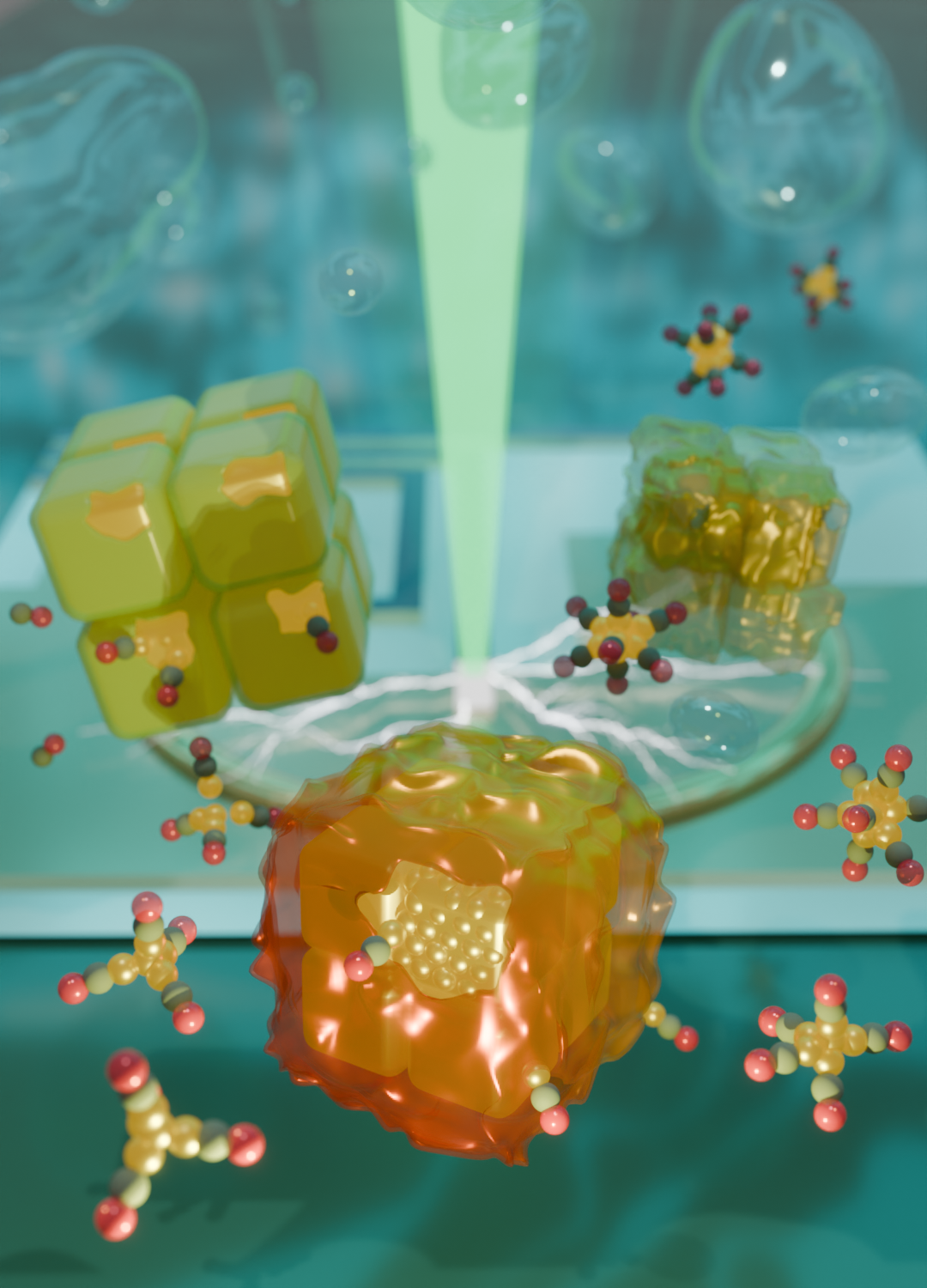
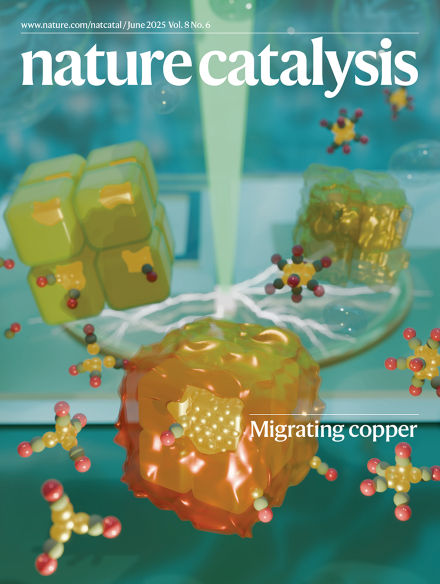
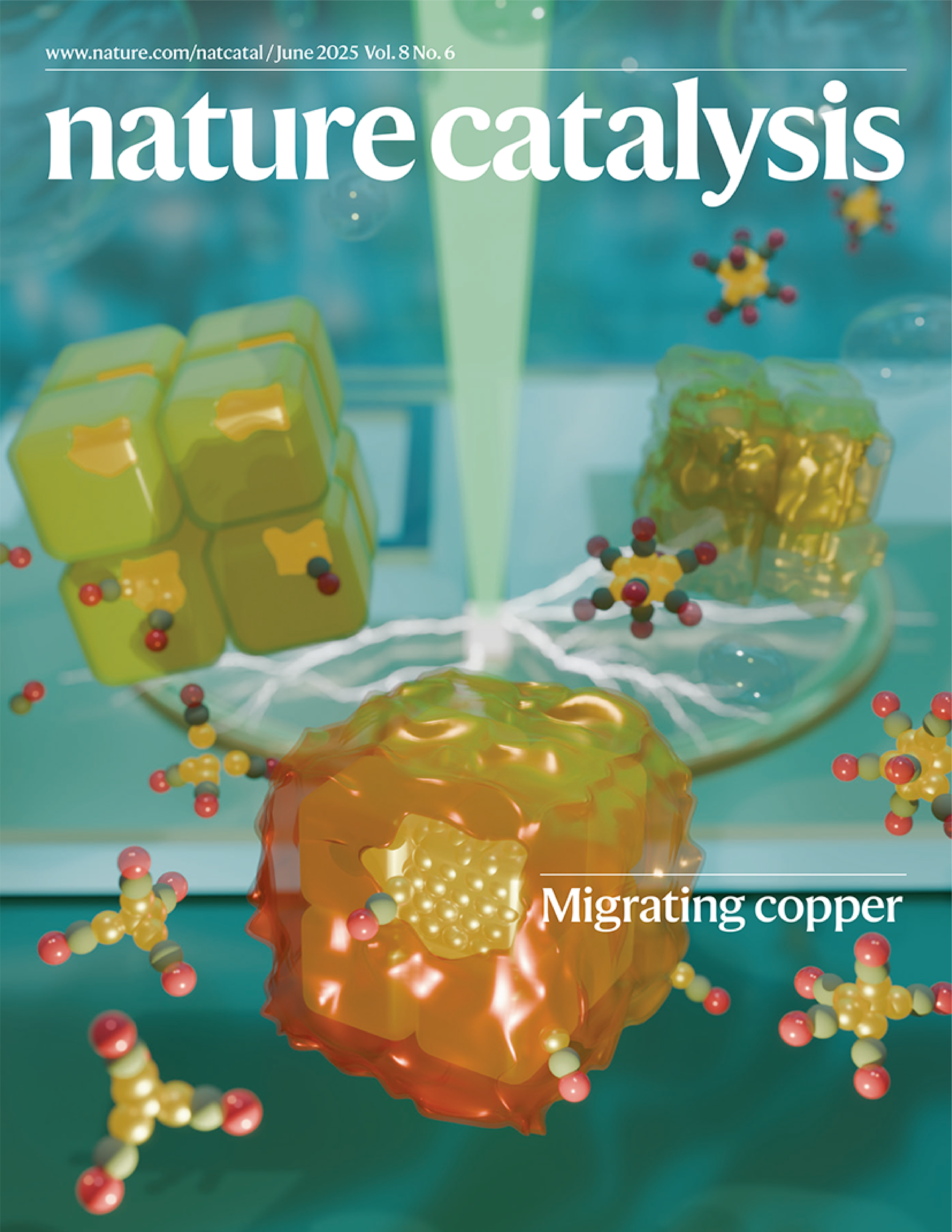
Working with Professor Yao Yang at Cornell University, I developed a concept communicating his research through a single scene. I then modeled and rendered a vibrant visual that was selected to be the cover art for the June 2025 issue of Nature Catalysis.
"In their work, Peidong Yang and colleagues reveal the dynamic evolution from faceted Cu nanocatalysts into metallic nanograins during CO2 reduction driven by the surface migration of electrogenerated copper carbonyl."
Yang, Y., Feijóo, J., Figueras-Valls, M. et al. Operando probing dynamic migration of copper carbonyl during electrocatalytic CO2 reduction. Nat Catal 8, 579–594 (2025). https://doi.org/10.1038/s41929-025-01359-w
The Process
Every choice has a reason, and when designing something with such a specific purpose, every detail matters.
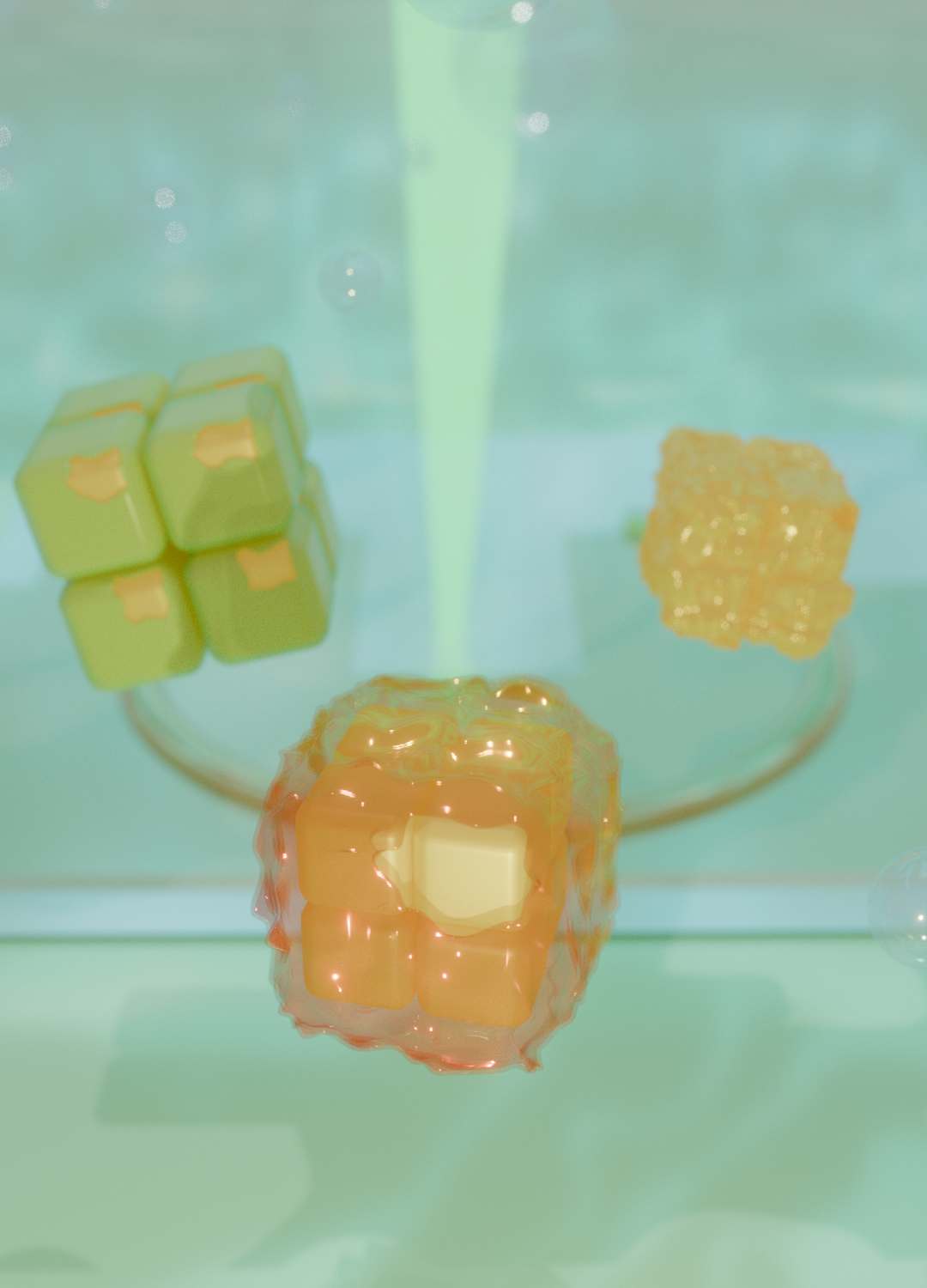
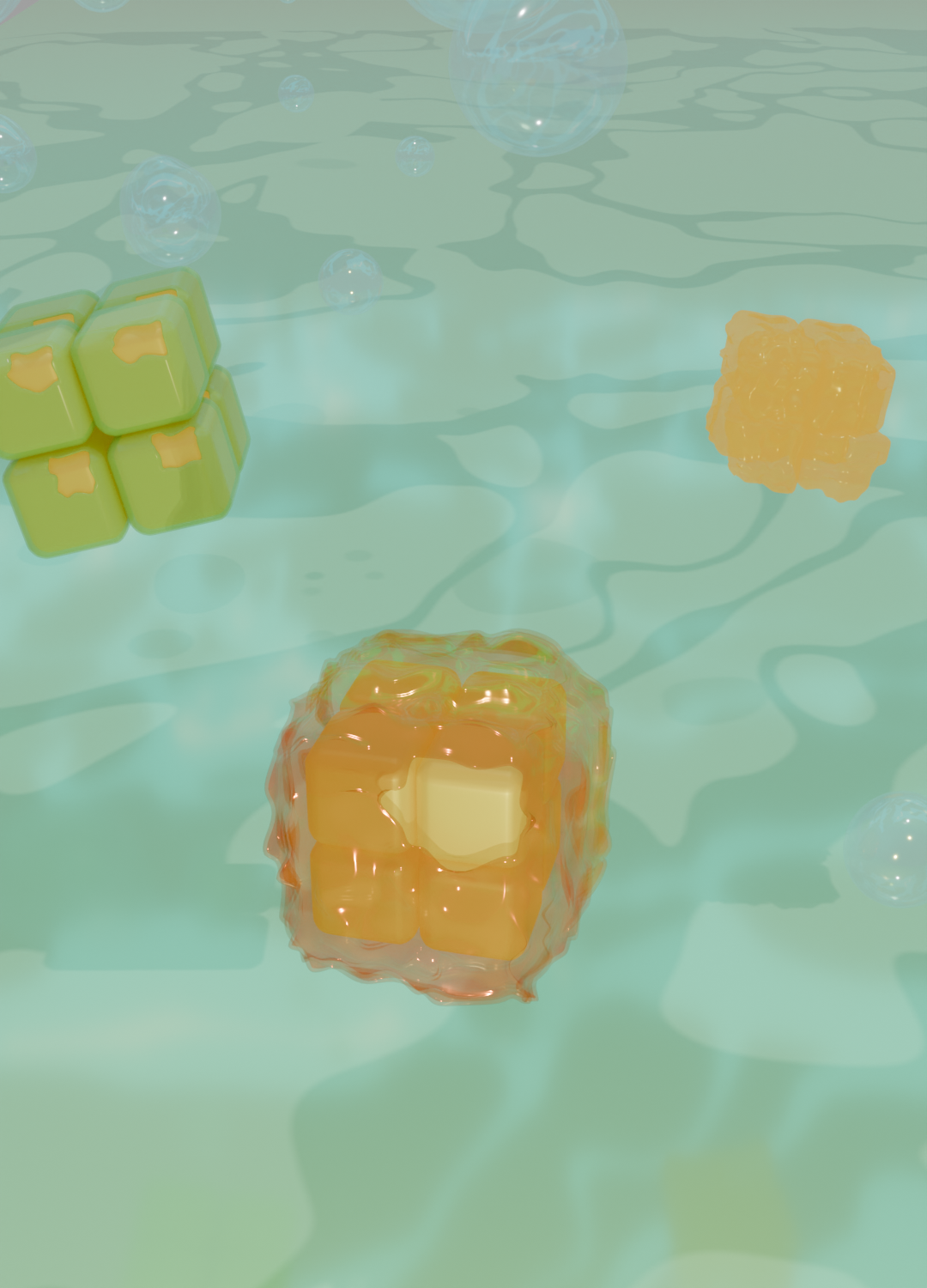
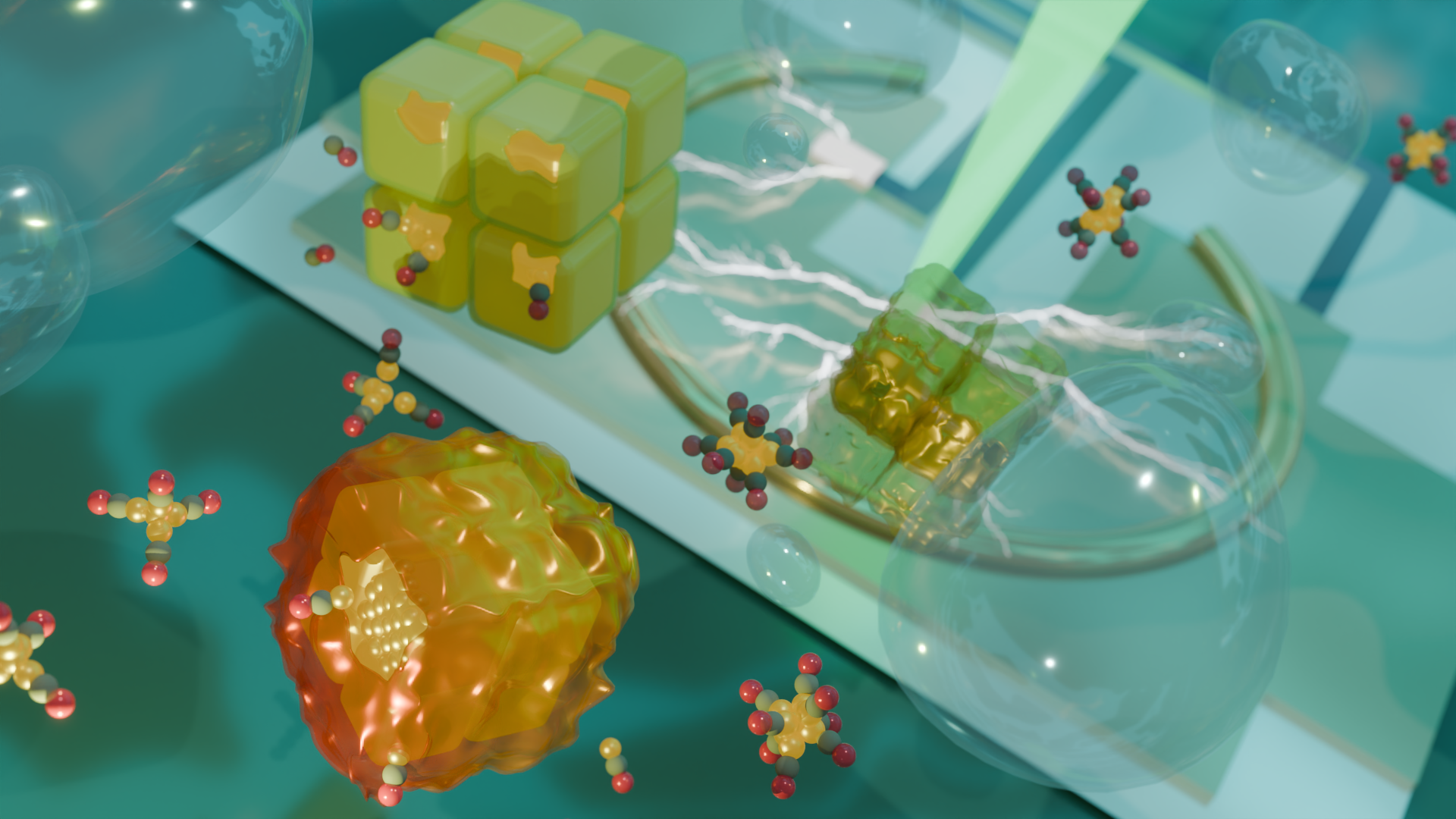
During the process of modeling in Blender, small change made all the difference. Most noticeable was adjusting background color to increase contrast between text and imagery. While it was unknown what the final design for print would look like I knew white would stand out while also bringing attention to highlights and details.
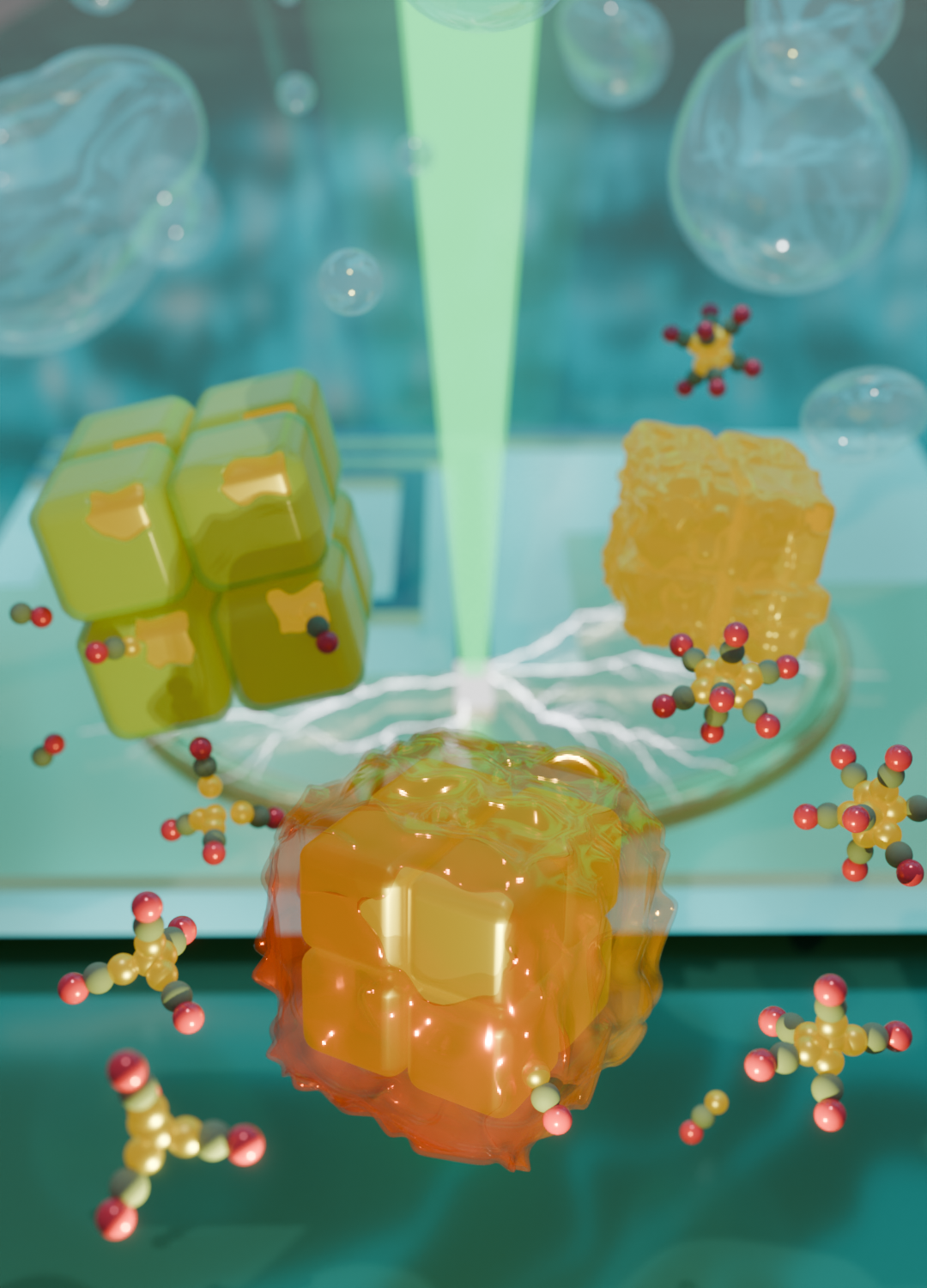
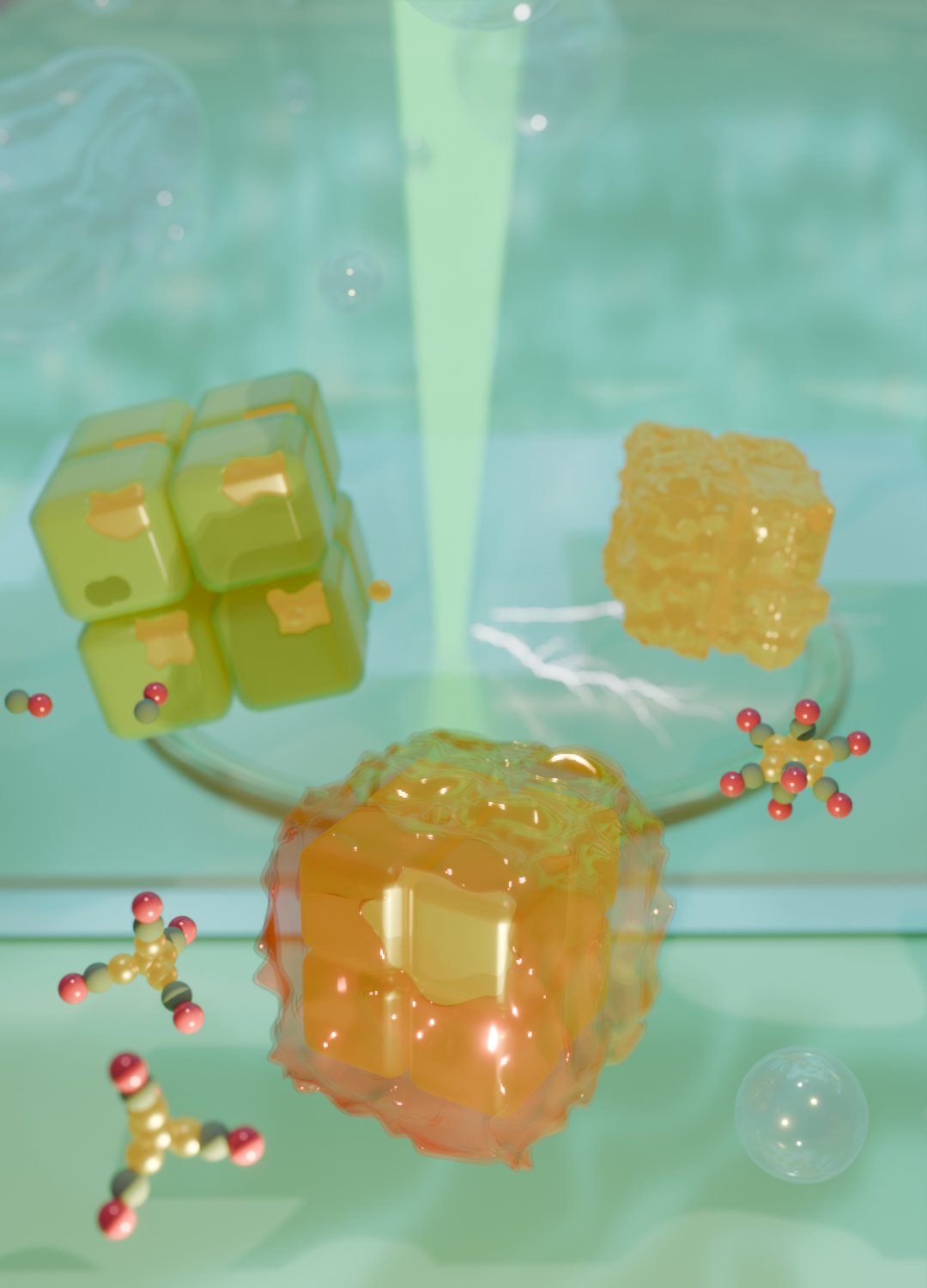
Subtle choices like decreasing the opacity of the bubbles and adding more individual copper atoms to the center particle make a larger difference than one would think. By adjusting the bubbles I knew it would increase contrast in turn improving readability. Adding individual copper atoms to the center particle (yellow metallic spheres) helps communicate the concept that these atoms are being captured to form polycrystalline metallic Cu nanograins, the main focus of the study.